TB-500 and tolerability data
A short human study offers some reassurance about whole thymosin beta-4. The smaller TB-500 fragment still needs direct answers.
Whole-protein tolerability in volunteers
The randomized Phase 1 study in 40 healthy volunteers tested intravenous, whole thymosin beta-4. It reported infrequent mild or moderate adverse events, with no serious adverse events or dose-limiting toxicities.
I value seeing volunteers observed under trial conditions, with a defined preparation. The mild and moderate events remain relevant even when the overall conclusion is favourable. ‘Well tolerated’ describes the balance observed in that study.
Its short observation period leaves long-term effects open, and healthy volunteers answer a different question from people seeking help for an injury. No controlled human trial establishes the smaller TB-500 fragment's healing effects or safety. My confidence stops with the preparation that was tested.
I trust reassurance more when the observed adverse events stay visible beside it.
The fragment within thymosin beta-4
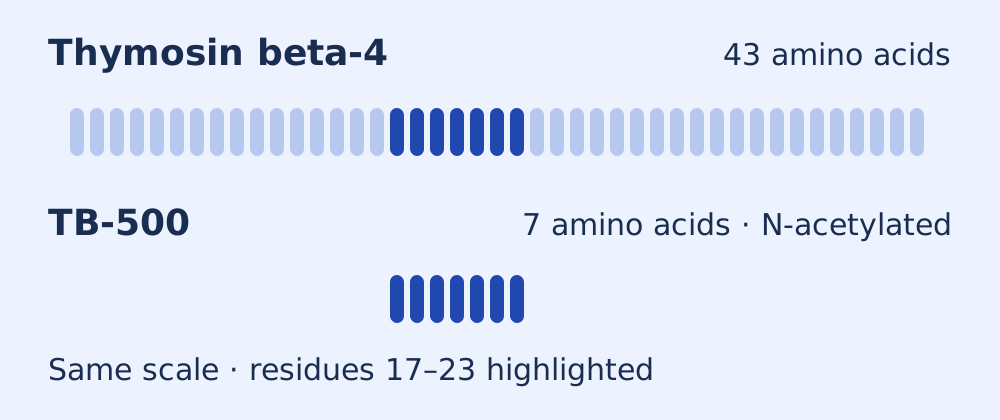
Thymosin beta-4 has 43 amino acids. TB-500 is a synthetic, N-acetylated fragment corresponding to residues 17–23: seven amino acids in the actin-binding region. The whole-protein repair literature and the structural work explain the interest in this region.
They leave a substantial transfer of evidence unresolved. Most encouraging efficacy studies used the whole protein. Direct controlled human trials have yet to establish the smaller fragment's healing effects.
I can understand choosing an active region for further study. Dropping the rest of the protein from an experiment’s description bothers me. The omitted sequence is a real chemical difference.
Actin binding
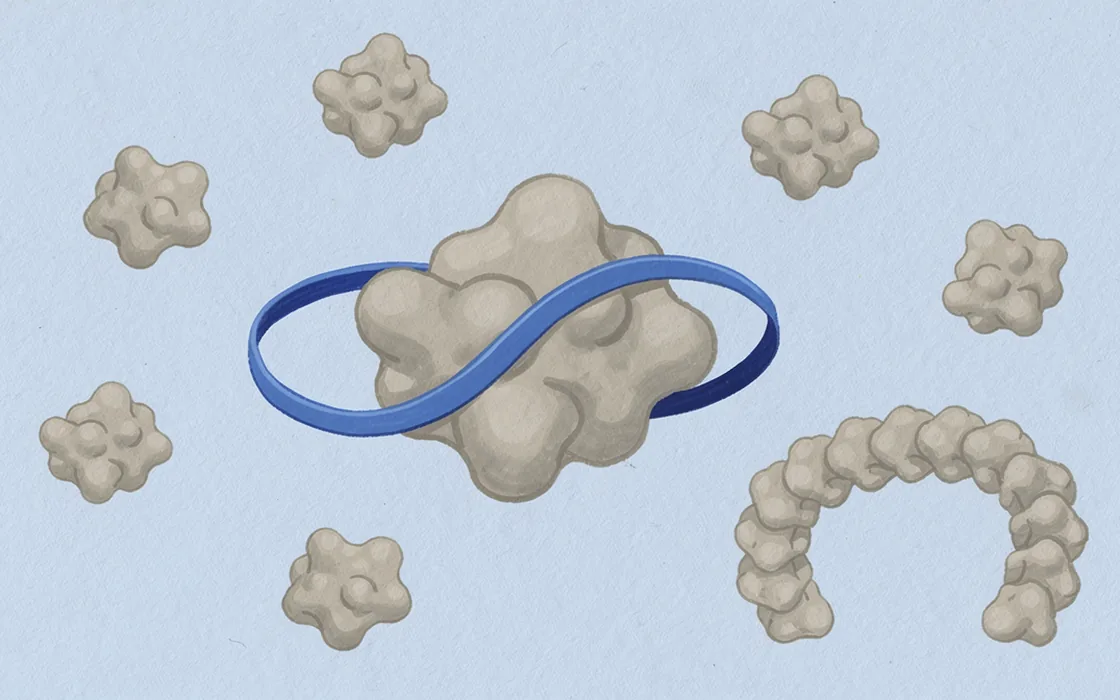
The reason for studying the fragment lies partly in actin, the protein cells use to change shape and move. In the structural study of a gelsolin–thymosin beta-4 hybrid bound to actin, thymosin beta-4 covered both ends of an actin unit, preventing it from joining a filament.
The review of thymosin beta-4 biology connects that actin reserve with cell migration and experimental tissue repair, alongside effects on inflammation, blood-vessel formation and scar-forming cells.
The molecular grip is absorbing. That account explains my interest in the fragment; it leaves the clinical safety question to a different kind of study. A detailed structure and a short tolerability trial contribute different pieces of information.
Rat stroke outcomes
A thymosin beta-4 dose-response experiment in rats after stroke reported improved neurological function at lower tested amounts; the highest amount gave no significant benefit. The study used the full-length protein in an induced rat stroke model.
I value this uneven result because it interrupts the expectation of a steadily increasing benefit. It also shows why tolerability and efficacy need separate consideration: an amount can be studied for one without answering the other. The experiment supplies no human regimen for TB-500.
TB-500 reports
Community accounts describe faster injury recovery, less joint stiffness and easier movement. Other accounts mention tiredness, local redness or soreness, headache, lightheadedness, nausea and changes in mood. These are anecdotal reports, not clinical evidence; they cannot establish either a benefit or the frequency of harm. Recovery through time, rehabilitation and other care can overlap with the reported changes.
The sports-medicine safety review emphasises scarce rigorous human safety evidence and possible serious harm. Research material adds uncertainty about identity, purity and contents. TB-500 has no FDA-approved therapeutic indication and is prohibited in competitive sport.
The biology of cell migration and vessel growth also raises a theoretical concern about supporting an existing tumour. That concern has not been measured as a human TB-500 risk. An account of possible repair needs to include this uncertainty; the safety comparison gives it more space.